
General AI
- Knows
- General knowledge. How a furnace works. What a good estimate looks like.
- Does not know
- Your jobs, prices, or late invoices unless you supply those records.
- Answers
- From what you give it. You gather the records yourself.
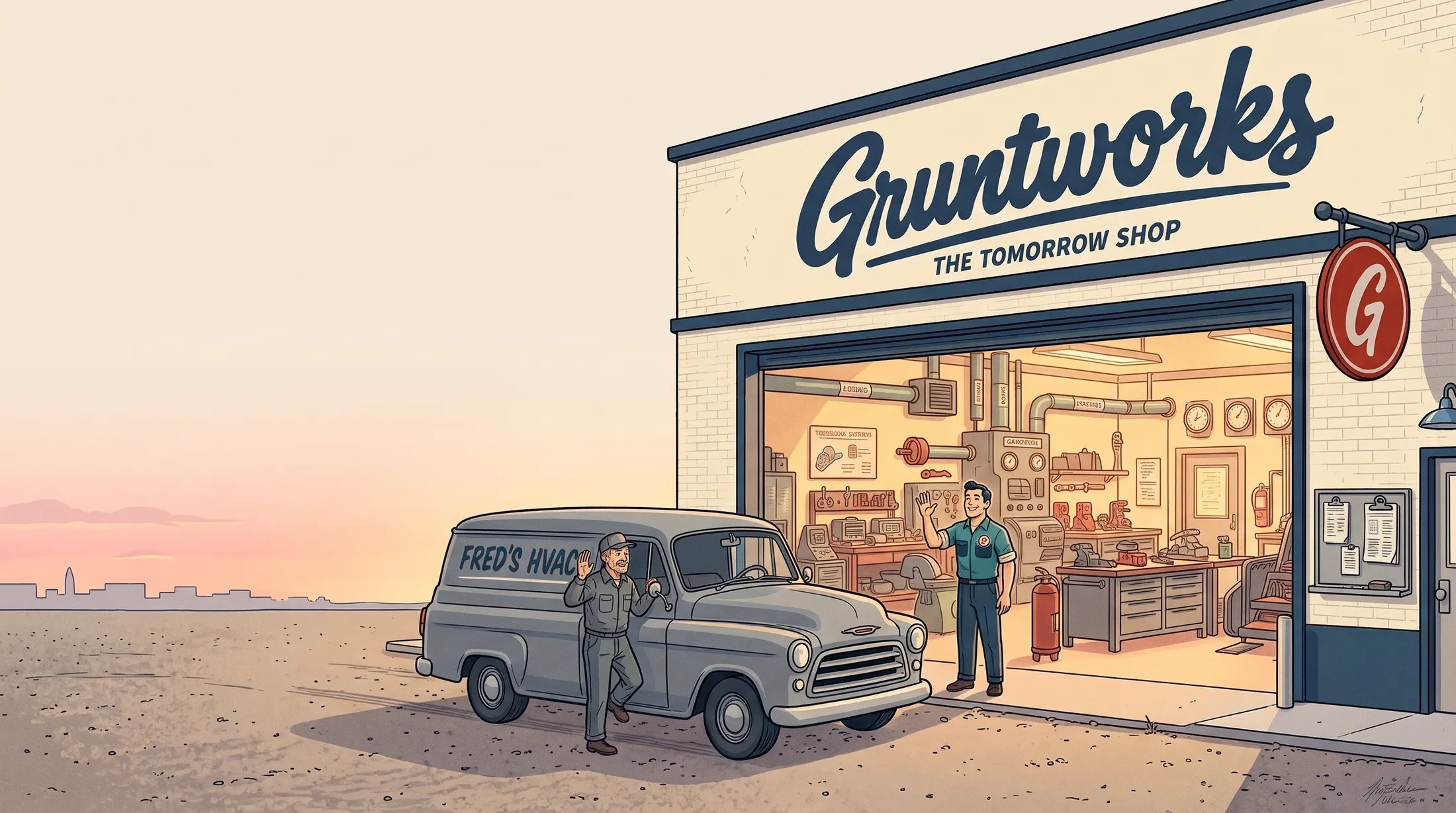
Gruntworks partners with you to define the strategy, build the systems, and develop the internal capability to run AI across your business.
Ask which jobs still need billing or which estimates to call first. AI Workspaces shows one way a build can put your own records to work for your team.







Local home service companies still win on trust and good work. But the pressure on them is new, and it comes from three sides.
Buyout ahead
Private equity buys up local companies and stacks big back-office muscle on top. They now set the pace you have to compete against.
Toll road
Large software, ad, and lead platforms keep raising what they charge for the tools, ads, and leads you depend on. Stop paying and it's gone.
Breaks under load
Marketing and AI agencies string together brittle workflows nobody can maintain, and they skip what today's best AI models can do. When it breaks, they're on to the next client.
There is another way to build. Here is what it looks like.
Every call answered and written down, including the ones at 7:42 on a Friday night.

No robots in the field. No new app for your techs to ignore. AI-native means the office work behind every job runs on one record, and the routine parts get done without anyone typing them twice.
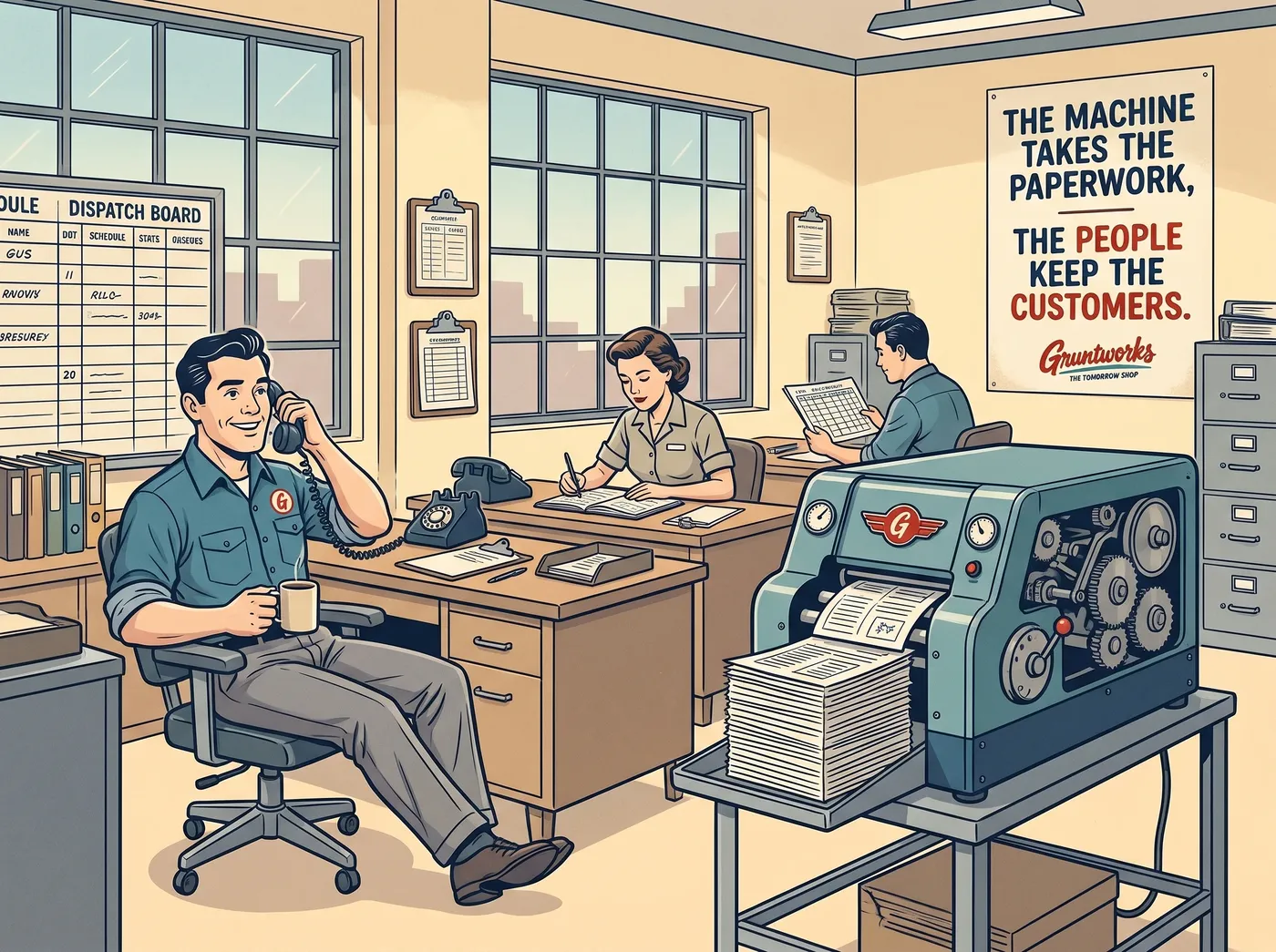

AI-native, as we build it
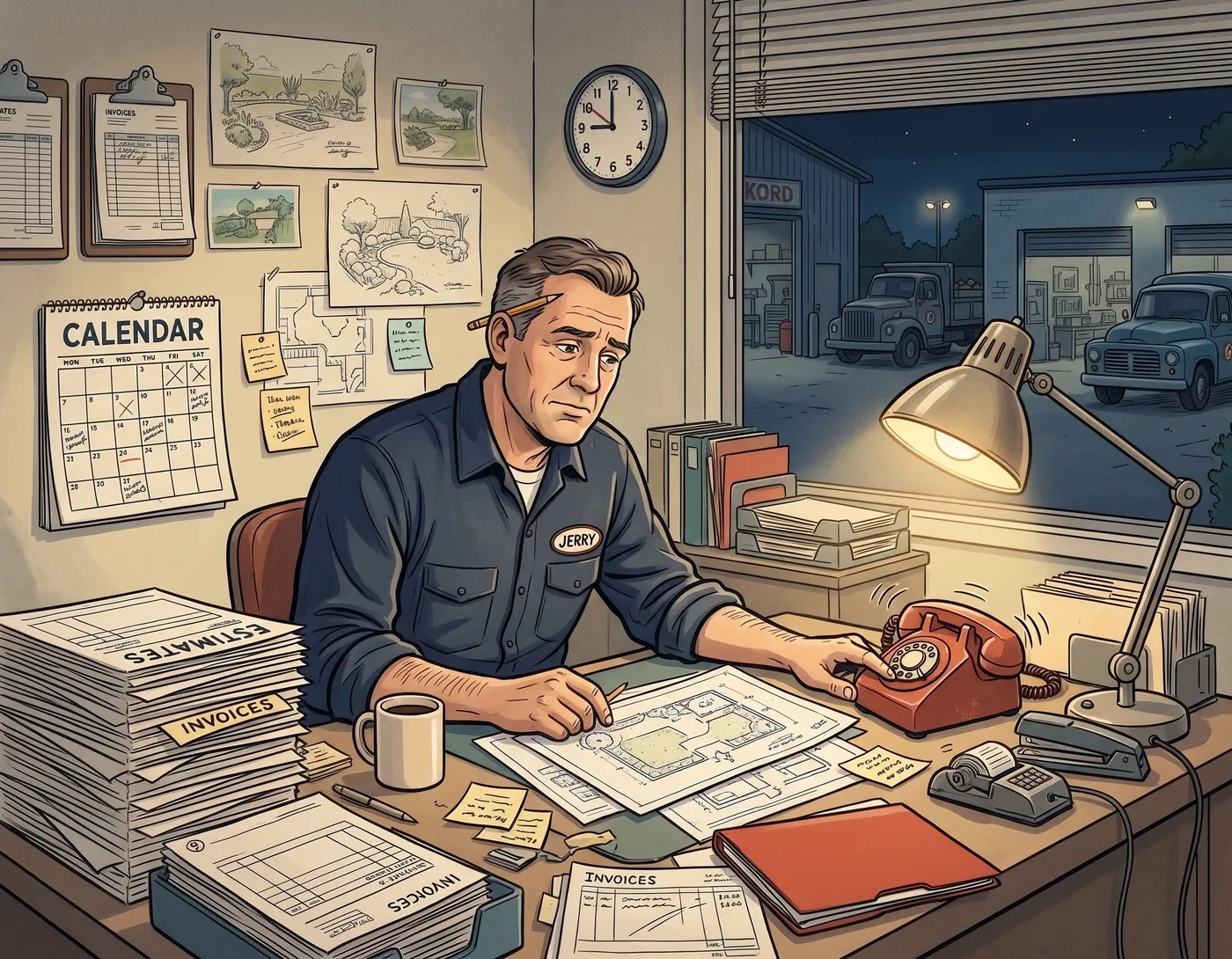
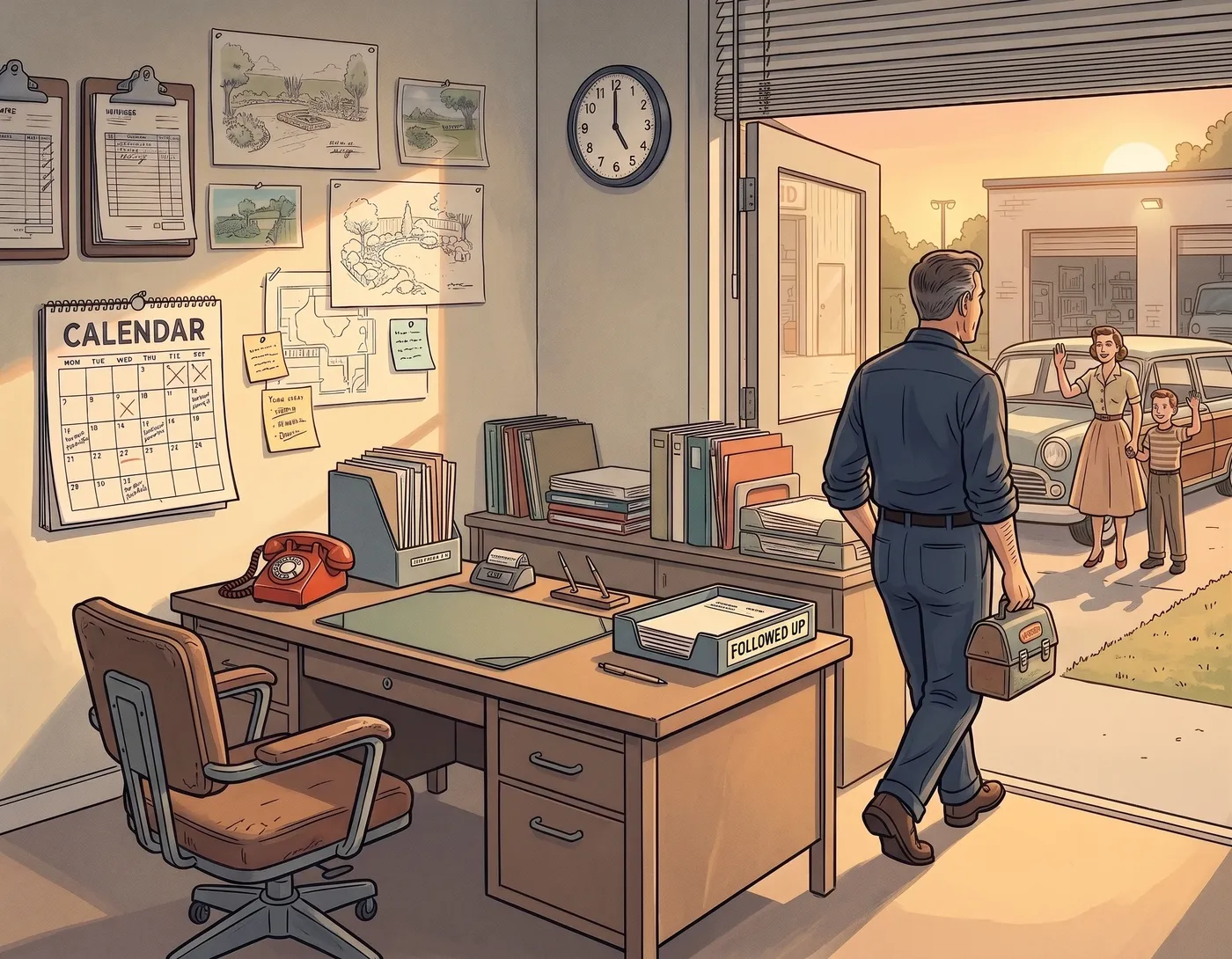
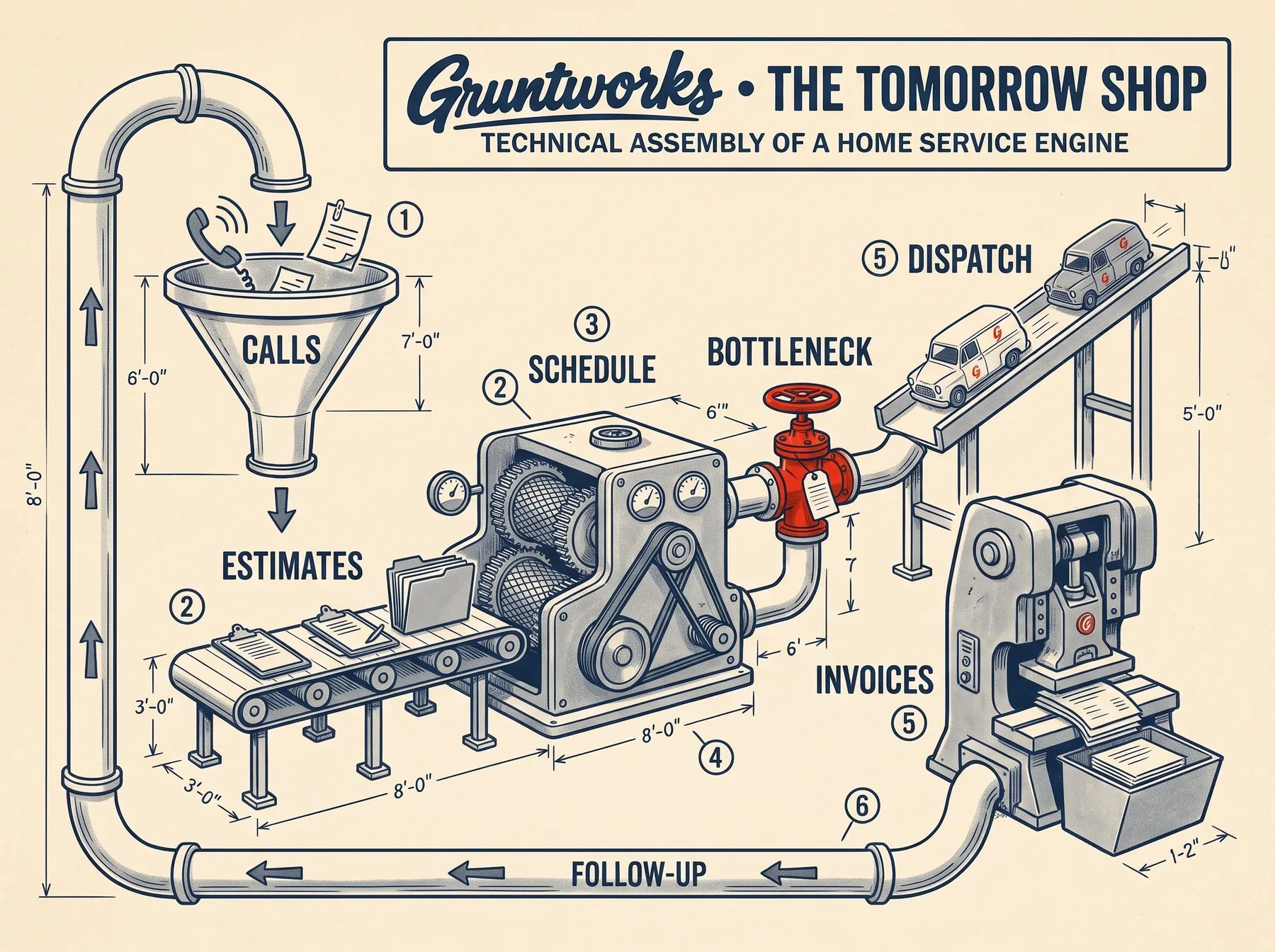
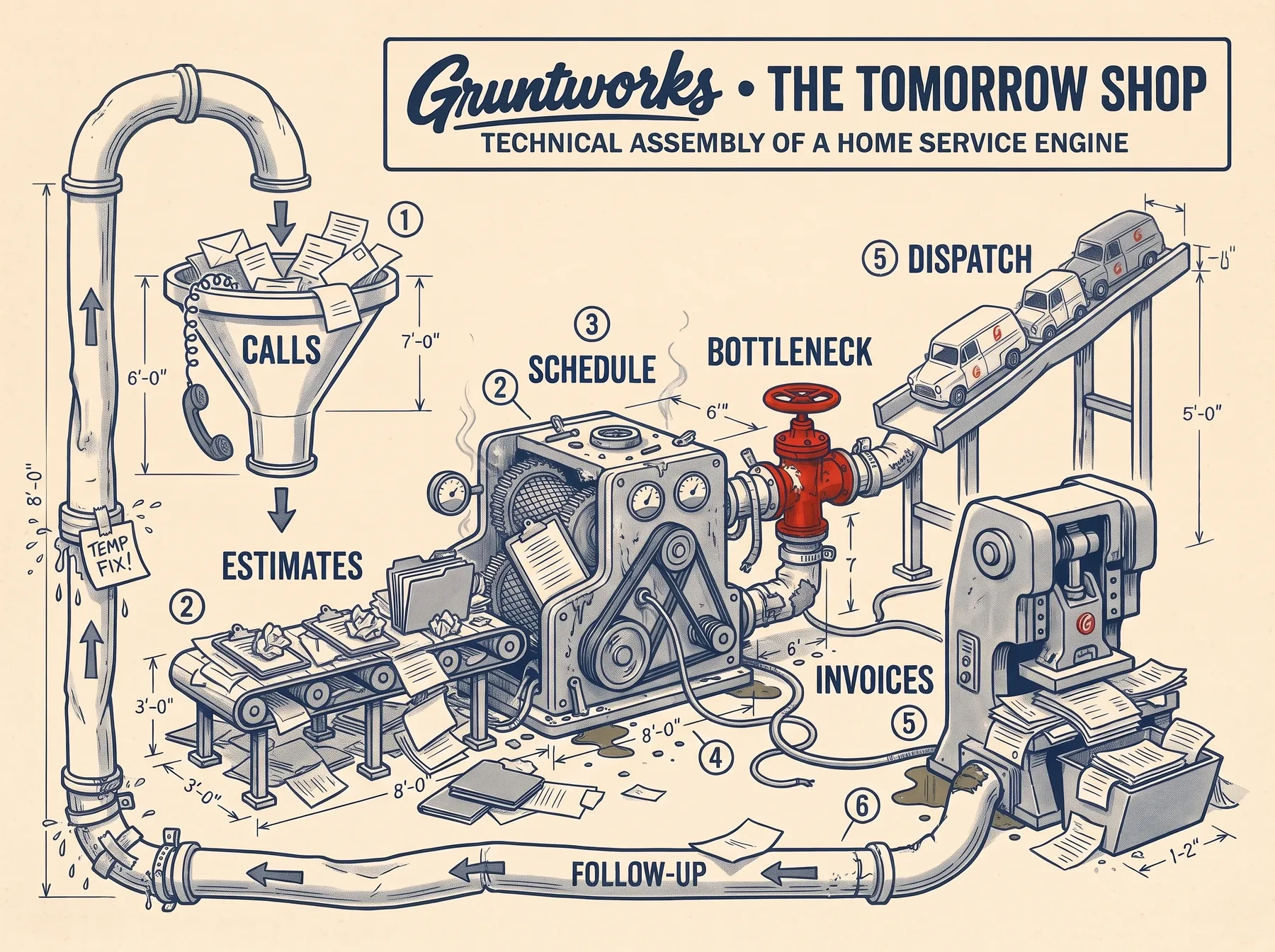
Calls feed estimates. Estimates feed the schedule. The schedule feeds dispatch, invoices, and the next call. We find the bottleneck that costs you the most, in your own numbers, and fix that first. Drag the handle to see the difference.
Ask about your jobs, estimates, and invoices. An AI Workspace can answer from the records included in your build, with a person approving what happens next.
AI Workspaces is one possible part of a build. Your Blueprint sets what it reads and does.
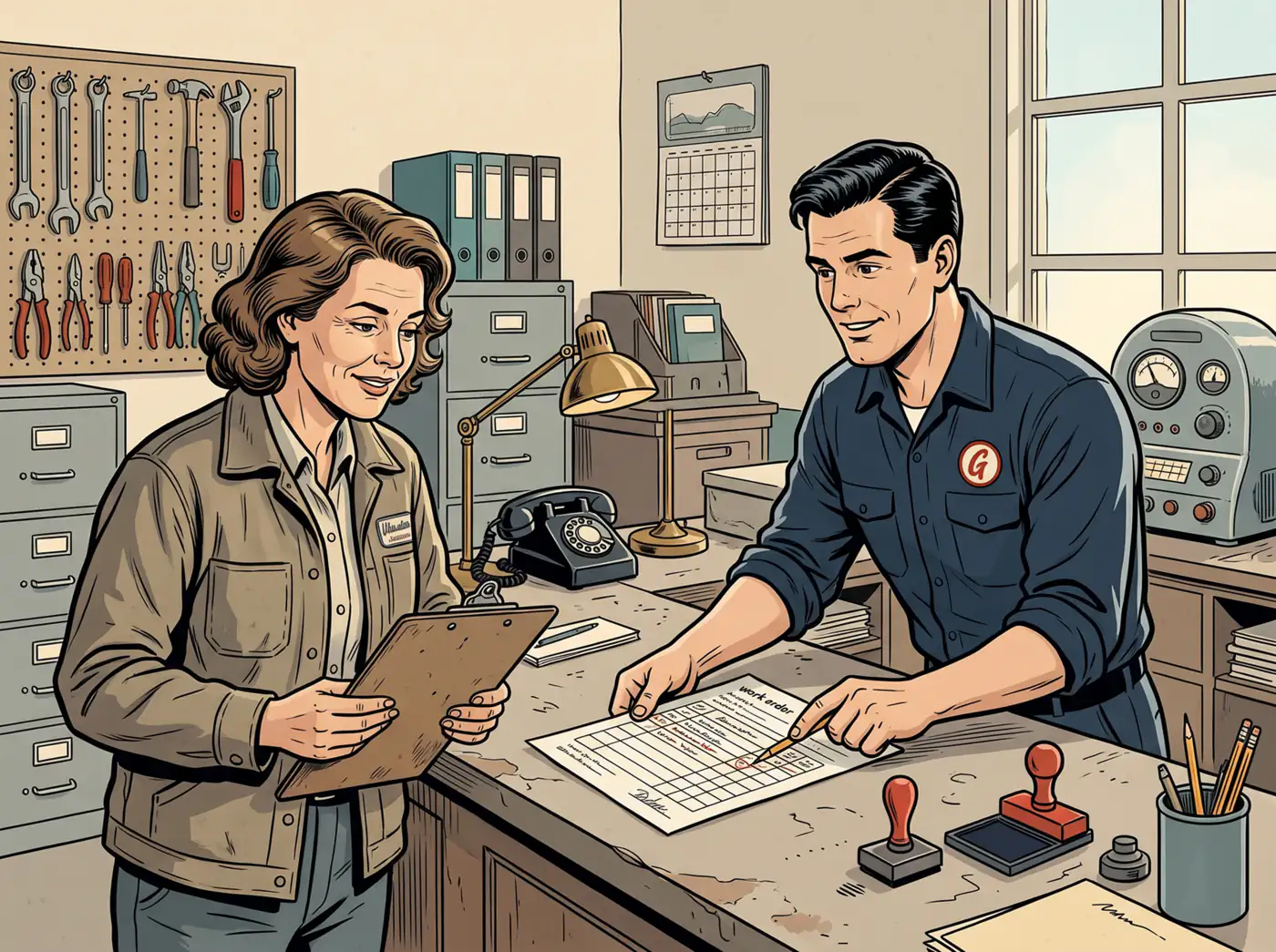
Fictional companyNo live systems connectedFigures are examples
Counter slipNo. EX-0417
Asked by the owner
Which finished jobs haven’t we billed yet?
Answered from: Jobs, Invoices. Example records only.
Work orderWO-EX-0417
| Job | Exception | Owner | Amount · Example |
|---|---|---|---|
| 1042 · BrennanPanel upgrade | Marked complete 23 days ago. No invoice started. | DanaOffice | $4,200 |
| 1051 · OkaforAC replacement | Invoice drafted. Never sent. | DanaOffice | $6,850 |
| 1057 · LindqvistRepipe, upstairs bath | Change order not signed. | MarcoCrew lead | $1,960 |
| 1060 · MoreauFurnace tune-up | Parts not entered on the ticket. | PriyaParts | $640 |
| 1063 · HaddadWater heater flush | Job photos missing. | MarcoCrew lead | $1,210 |
| Total waiting | $14,860 | ||
Dana approves sending invoices 1042 and 1051 ($11,050). Marco and Priya clear the other three first.
Approved by
Fictional company. No live systems connected. Every figure on this order is an example.
What would you ask about your own business first?
Book a discovery callAsking a question is one way to use your records. Systems can also start work when something happens. These examples show the software, AI, and your people each doing their part. We agree which workflows to build before work starts.
Every call ends with a decision, so nobody's time gets wasted. The sales calls are free, and they are not an audit. A real diagnosis means timing the work with the people who do it, and that's paid work.
20 to 30 minutes with the owner. We find the constraint that costs you the most, in your numbers, pick where to start, and give you a price range.
The cost of doing nothing, the plan, and a fixed price. You decide on the call.
We map the workflow and time it with your people. Then we build the fix inside the tools you already run.
Your team learns it on real work. We stay until they use it every day.
Every fix starts with a diagnosis of the one workflow. If the diagnosis shows the problem is bigger than a quick fix, we stop before we build. You get the map, and what you paid becomes a Blueprint for that part of the business.
A quick fix sold too early never turns into a failed build.
We time the work with the people who do it.
Say your estimates go out and nobody follows up. Here's what each kind of company would sell you to fix it.
| Another app | An AI agency | Gruntworks | |
|---|---|---|---|
| What you get | A login, and one more place to type. | Automations and a chatbot, built fast. | A fix for the bottleneck that costs you the most, in your own numbers. |
| Your software | Switch to theirs, or add one more. | Wired together with whatever is quickest. | Stays. We build inside the tools you already run. |
| Who sets it up | Your office, after hours. | They do, then hand it over. | We do. Then we train your people on their own work. |
| How it’s priced | Per seat, per month, for as long as you use it. | A monthly retainer. | A fixed price, set by what the problem costs you. |
| After go-live | A support queue. | On to the next client. | We stay until your team uses it every day. |
| Who owns it | They do. Stop paying and it’s gone. | Depends on the contract. | You do, once it’s paid for. |
You keep the tools you already pay for. We connect the records your build needs and train your team to use it. You own what we build once it is paid for.
 Field service
 Accounting
 Office and files
 Phones and texting
Gruntworks
 Where work comes in
 AI we put to work
Count the office hours you spend on the same work twice, the software and outside help you pay for to patch the gaps, and the money that slips through. The starting numbers are an EXAMPLE. Put in yours. They stay in your browser. Nothing is sent anywhere.
EXAMPLE numbers. Replace them with yours.
Friction costs about
$36,840 a year
An estimate from your own numbers, not a promise.
Ranges for home service companies doing a year. We set each price inside its range by what the problem costs you each year, not by the hour.
Each step stands on its own. Stop after any of them and you keep what was delivered. A Blueprint sets the scope of a larger build. An AI Workspace can be part of that build; it is not included in every one. We set each price inside its range by what the problem costs you each year, not by the hour. Ranges are for home service companies doing a year.
Tools change. AI models change. Your business changes. We don't build it and leave. And whether you keep us on or not, you own every system we built once it's paid for.

Keeps it running.
a year, per system
Offered with every Bottleneck Fix.
Makes it better every month.
a year
Comes with every build.
Plans are priced per year. Paying monthly adds .
From the shop floor
Your best dispatcher has rules nobody wrote down.
That knowledge is worth more than any software you rent.
Gruntworks is Matt Morris. He dropped out of high school and built a landscaping company. Then he moved into startups and trained as a software engineer, right as AI turned that work upside down. He came back to serve the trades.
Matt does the work himself, with his own AI systems. There's no bench of contractors. That's why we take on two or three new companies a month, and no more.
Gruntworks builds systems for your business. AI Workspaces is one possible part of a build, scoped and priced in your Blueprint. It is not a software subscription or a separate paid step. We also fix individual bottlenecks and train teams on the tools they already have.
AI can help with a document you give it. A connected AI Workspace is built to answer agreed questions from the business records in scope, with the sources shown. Connecting those records is build work. AI Enablement helps your team use its existing tools and does not include building integrations.
The Ask example reads records and suggests a next step for a person to approve. Your Blueprint sets what a real build may read, write, or send, and where approval is required. The examples on this page are not connected to live systems.
We choose the tools around the work and the people who will use them. For a build, the Blueprint sets out the tools, records, and permissions before we start. This example does not promise a connection to any particular AI service or business system.
No. We build inside the tools you already run: your field-service software, your accounting, your phones, your calendar. A fix adds to your system of record. It doesn't rip it out.
No. The systems take the paperwork and the follow-up. Your people make the decisions, handle the exceptions, and keep the customers.
You do, once it's paid in full. You can stop after any step and keep what was delivered. We don't hold a system hostage to sell you a plan.
Every fix comes with 30 days of support after go-live. After that, a care plan covers monitoring, repairs, and updates. Without a plan, we fix it and bill per job.
No. A pilot costs as much to build as the real thing. A Bottleneck Fix is the small, complete first step a pilot tries to be.
No. It's a free, short conversation to find where to start. A real diagnosis means sitting with the people who do the work and timing it. That's paid, and it's part of every fix and every Blueprint.
Fill out the ticket. We'll call you back to book a 20 to 30 minute discovery call with the owner.
We take on two or three new companies a month. That's how much one shop can do well.